Skip to content
VIVIERHEALTH & LONGEVITY

Loading…

Searches this site only · nothing you type is sent anywhere

PATIENT GUIDE

DEXA body composition
& bone density.

Understand What Your Weight Cannot Tell You

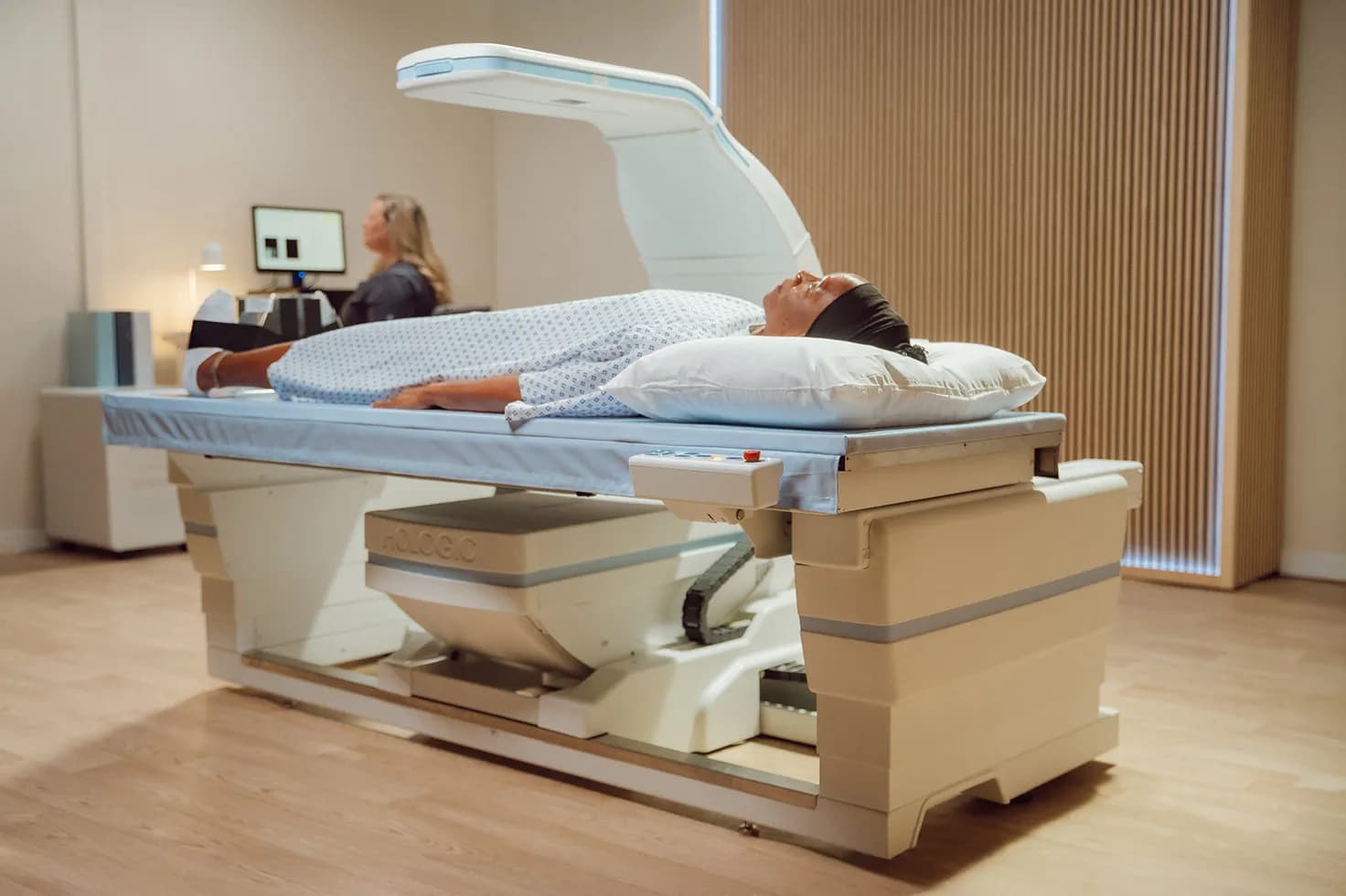
A person lying on the open, padded table of a DEXA scanner, with the scanning arm suspended above the torso and a technologist seated at the control console behind.
A DEXA scan in progress. Illustrative — not a Vivier patient or facility.

Two people can share the same weight and BMI while having profoundly different levels of muscle, body fat, visceral fat, and bone density.

A DEXA scan looks beneath the number on the scale to provide a detailed picture of how your body is composed—and how that composition may be changing over time.

The scan can evaluate:

  • Bone mineral density
  • Total body-fat percentage
  • Lean mass and estimated muscle distribution
  • Visceral abdominal fat
  • Subcutaneous fat
  • Regional fat and lean mass
  • Differences between the right and left sides of the body
  • Android-to-gynoid fat distribution, or abdominal versus hip and thigh fat

This information creates a more meaningful baseline for longevity, metabolic health, fitness, healthy aging, and treatment monitoring.

1 / 11

DEXA AT VIVIER

Measurement With Meaning

At Vivier, DEXA findings are not treated as isolated numbers.

The purpose is not simply to measure your body. It is to better understand it—and use that information to guide a more personalized path forward.

WHEN CLINICALLY APPROPRIATE, YOUR RESULTS CAN BE CONSIDERED ALONGSIDE YOUR:

  • 01Health history
  • 02Laboratory findings
  • 03Hormonal and metabolic health
  • 04Nutrition
  • 05Exercise habits
  • 06Medications and therapies
  • 07Personal health and performance goals

Know your foundation. Protect what matters. Track what changes.

Schedule your DEXA evaluation. Establish a clearer baseline for your bone health, body composition, and long-term physical resilience.

Educational use only. This page explains what a DEXA scan measures; it does not diagnose osteopenia, osteoporosis, or any other condition, interpret your results, or replace a clinical evaluation. Whether a diagnostic bone-density study is appropriate, and how often, is a clinical decision based on age, sex, history, medications, and individual risk factors. DEXA uses a very low dose of ionizing radiation, and pregnancy should be declared before the scan rather than at the door. Two results are commonly over-read: visceral fat is estimated by the scanner's software from the abdominal region rather than imaged directly as CT or MRI would image it, and lean mass is not the same measurement as skeletal muscle. Comparison over time is only meaningful when scans are performed on the same system under similar conditions. Call 911 for emergencies.